Theia's Secret | Moon's Origin Finally Solved?
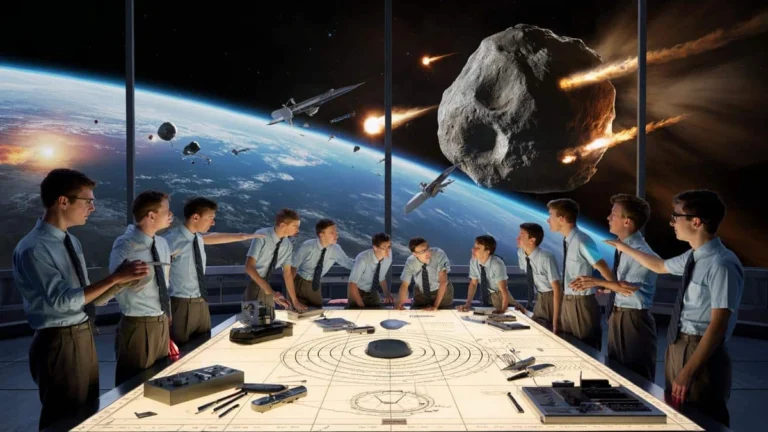
Have you ever looked up at the moon and wondered about its birth? We’ve all seen those artist renderings of Earth getting smacked by a Mars-sized object, but the truth? It’s been shrouded in mystery. Until now, that is. Let’s be honest, the Giant-impact hypothesis , while widely accepted, has always felt a little… incomplete. But new research is painting a clearer, and frankly, more fascinating picture of Theia , the moon’s impactful parent.
The ‘Why’ Matters | More Than Just Space Rocks

So, why should you care about some ancient space collision? Here’s the thing: Understanding the origin of Theia isn’t just about satisfying our cosmic curiosity. It’s about understanding the very foundations of our planet and solar system. It tells us about the building blocks of Earth, the conditions that allowed life to flourish, and even where we might find other habitable planets. Think of it as tracing your family tree, but on a planetary scale. We are not alone in this solar system and NASA Confirms Comet is proof.
I initially thought this was straightforward – another study confirming what we already knew. But then I dug deeper. The implications of this discovery are profound. The Theia impact didn’t just create the moon; it fundamentally shaped Earth. It influenced our planet’s composition, its rotation, and even the potential for life. It’s like discovering that a seemingly minor event in your childhood actually set you on the path to where you are today.
A New Piece of the Puzzle | Isotope Analysis
The breakthrough comes from analyzing isotopes – different forms of the same element – found in lunar rocks brought back by the Apollo missions. Specifically, scientists focused on isotopes of oxygen and titanium. Now, stick with me, because this is where it gets interesting. If the moon was formed primarily from Theia , its isotopic composition should be noticeably different from Earth’s. But previous studies showed they were remarkably similar, leading to a major head-scratcher. This new research, however, uses more precise measurements and a wider range of samples, revealing subtle, but significant, differences. This discovery gives new meaning to lunar formation .
What fascinates me is the detective work involved. It’s like forensic science, but for planets! Scientists are meticulously analyzing tiny clues left behind billions of years ago to reconstruct a cosmic crime scene. And the culprit? A protoplanet named Theia .
The Emotional Angle | Connecting with the Cosmos
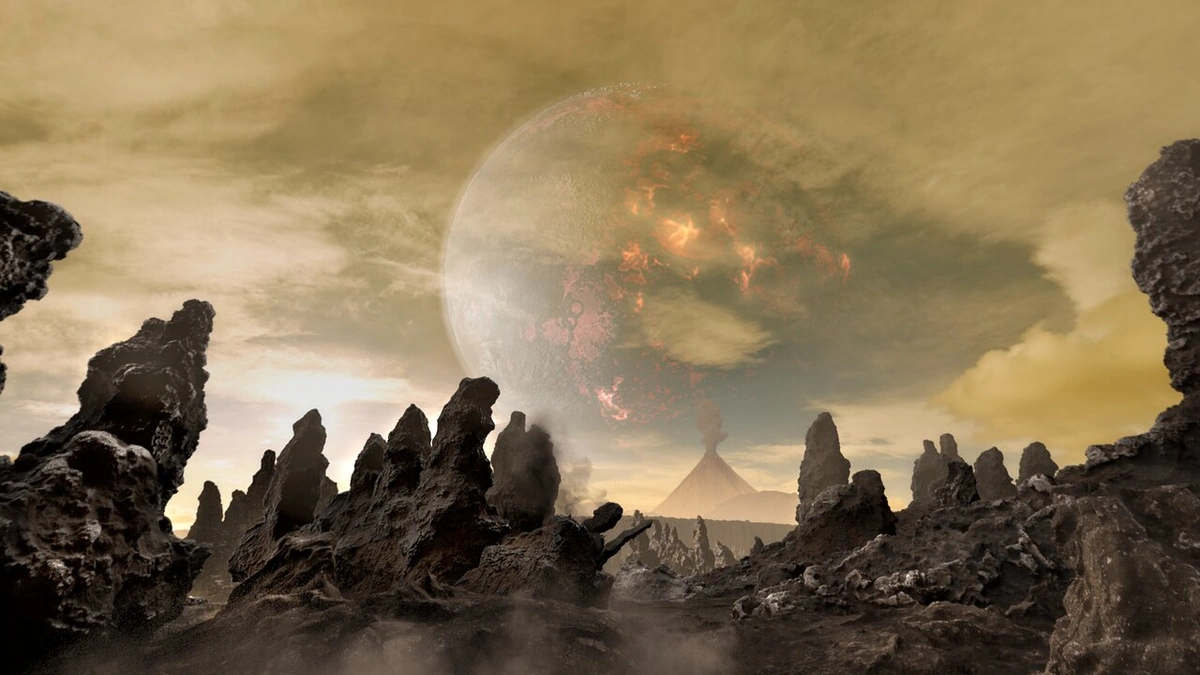
Imagine the sheer scale of this event. Two planetary bodies, each with the mass of a small planet, colliding at tremendous speed. The energy released would have been unimaginable, melting the Earth’s surface and creating a debris disk that eventually coalesced into the moon. It’s a scene straight out of science fiction, but it’s our reality.
And there’s a certain emotional resonance to it, isn’t there? We are, in a very real sense, children of this cosmic collision. The moon, that familiar beacon in the night sky, is a direct result of this ancient event. It’s a reminder of the turbulent, chaotic origins of our solar system – and of our own existence. Many people also wonder about the early solar system .
What it Means for the Future of Space Exploration
Understanding Theia’s origin doesn’t just satisfy our curiosity about the past; it also has implications for the future. By studying the moon, we can learn more about the early Earth and the processes that shaped our planet. This knowledge can help us understand the potential for life on other planets and guide our search for extraterrestrial life. It’s all connected, you see. The more we learn about our own solar system, the better equipped we are to explore the cosmos and answer the ultimate question: Are we alone?
Think about future moon missions. This new isotopic data could guide where we send probes, what rocks we prioritize for analysis. Maybe we’ll finally find a definitive piece of Theia embedded in the lunar surface. And hey, while you are at it, read about this Supermoon Brazil.
FAQ Section
Frequently Asked Questions
What exactly is Theia?
Theia is the name given to the hypothetical protoplanet that collided with Earth, resulting in the formation of the Moon. It’s believed to have been roughly the size of Mars.
How did scientists discover this new information?
Scientists analyzed isotopes of oxygen and titanium in lunar rocks collected during the Apollo missions. They used more precise measurement techniques to identify subtle differences in isotopic composition between Earth and the Moon.
Why is understanding the origin of the Moon so important?
Understanding the Moon’s origin helps us learn about the early Earth, the processes that shaped our planet, and the conditions that allowed life to arise. It also provides insights into the formation of other planets and the potential for life elsewhere in the universe.
Could this discovery change our understanding of the Giant-impact hypothesis?
Yes, this research refines the Giant-impact hypothesis by providing more detailed information about the composition of Theia and its contribution to the Moon. It helps address previous inconsistencies and strengthens the overall theory.
What are LSI Keywords and why are they important?
Latent Semantic Indexing (LSI) keywords are terms related to your primary keyword that help search engines understand the context of your content. Using them makes your content more relevant and can improve search rankings.
What’s next in Moon exploration and research?
Future moon missions could focus on collecting more samples from different locations on the Moon, guided by the new isotopic data. Further analysis of these samples could provide even more detailed insights into the origin of Theia and the formation of the Moon.
So, the next time you gaze at the moon, remember it’s not just a silent observer in the night sky. It’s a testament to a cataclysmic event that shaped our world – and a reminder that even in the vastness of space, we are all interconnected.
About the Author